Reduced complexity:
Significantly reduced master data complexity through semantic consolidation.

Master data with AI – clean, extract, migrate
Master data determines how smoothly an SAP system operates on a day-to-day basis and how much effort a migration actually requires. In practice, two types of problems emerge that appear different at first glance but share the same root cause: too little time and attention devoted to data quality during day-to-day operations. One issue involves master data that exists in the system but has grown unstructured over the years: inconsistent free-text entries, hundreds of variants of the same content, and no common structure.
The other is product data, specifications, and technical information that lie dormant in PDFs, spreadsheets, and drawings but have never been transferred into the SAP system as structured master data. abat solves both problems with AI-powered agents that step in where manual work reaches its limits.
Intelligently cleaning master data
How does AI consolidate accumulated free-text data?
The process is based on several coordinated AI methods:
- Semantic analysis instead of syntax: Rather than merely comparing texts syntactically, large language models, embeddings, and clustering algorithms are used to identify contextual meanings – regardless of word choice, spelling, or language.
- Semantic consolidation: Several hundred or thousand mailing texts are semantically grouped and standardized – transforming approximately 1,000 accumulated texts into about 100 clearly defined, standardized, and technically accurate pieces of content.
- Traceable results: Each summary is based on identified commonalities in co
Benefits of master data cleanup
AI instead of manual analysis:
Automated analysis instead of manual cleansing – faster, more consistent, and scalable.
Higher data quality:
Traceable results provide a reliable foundation for SAP migrations.
Full control:
Business units review and manage the results, while the effort required for manual analysis is significantly reduced.
Unlocking master data – AI identifies what’s missing in the system
In many companies, product-related information exists but is not where it’s needed. Technical data, dimensions, specifications, or material properties are often found in documents, PDFs, or technical drawings but are not stored as structured master data in the SAP system. abat uses multimodal AI agents to close this gap.
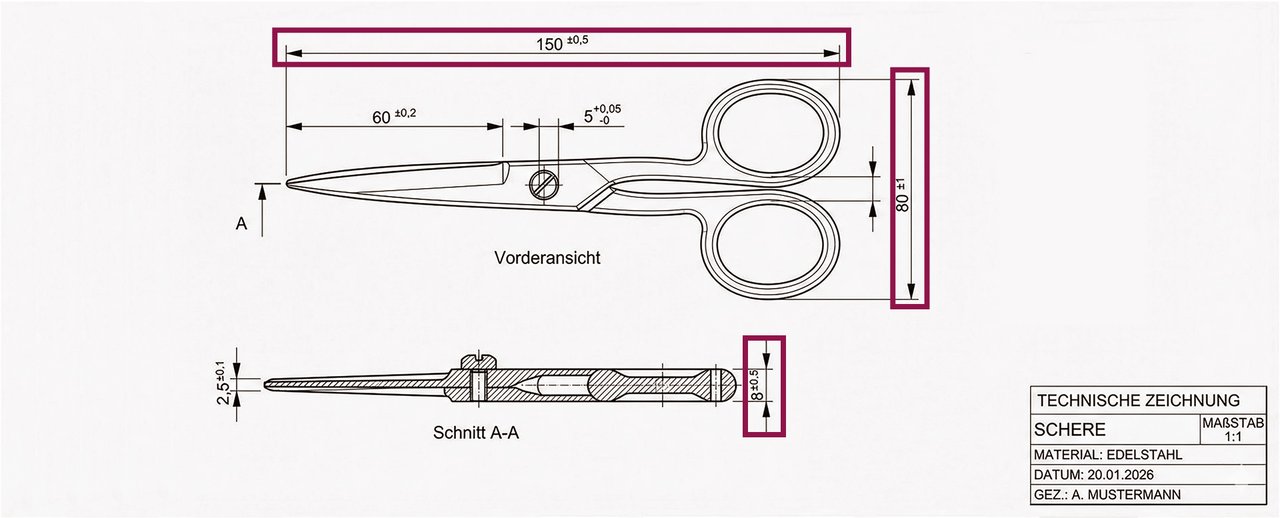
How does AI extract master data from documents and drawings?
The agents analyze documents, images, and technical drawings, identify relevant content, and specifically extract information relevant to master data:
- Multimodal document analysis: Text, tables, and visual elements are evaluated together to reliably capture even complex information.
- Targeted extraction: Values relevant to master data are identified and extracted from documents and drawings – rather than being entered manually.
- Mapping and validation: The extracted values are mapped according to the product, validated, and prepared for further processing in the SAP system.
Benefits of master data extraction
Higher data quality:
Structured, high-quality master data – ready for immediate use in logistics, procurement, production, and other downstream processes.
Less manual effort:
Time-consuming manual data entry is largely eliminated.
Leveraging knowledge:
Existing knowledge is systematically captured and made usable.
Full control:
Business units retain control at all times – results are presented in a transparent and traceable manner.
Flexibly scalable:
Suitable for one-time data cleansing initiatives as well as for continuous master data development.
Start your migration with clean, complete data
How many variants of the same shipping text are stored in your system, and how much technical product data exists only in PDFs and drawings – not in SAP? Talk to us: Using a sample of your actual data, we’ll show you just how much potential semantic consolidation and multimodal extraction can unlock.
Both approaches are typical AI-Shore use cases: clearly defined processes handled by AI agents, while your business units retain control. With AI-Shore, we permanently embed such solutions into your system landscape – in compliance with data protection regulations and fully integrated.

Frequently asked questions: master data with AI
How does data cleansing differ from data enrichment?
The cleanup process consolidates data that is already in the system. The data capture process brings data into the system that previously existed only in documents and drawings. Both approaches complement each other – especially in migration projects.
Is a technically necessary variant lost during consolidation?
Does this also work for free-text fields other than shipping texts?
How does this approach differ from rule-based cleansing?
What does “multimodal” mean in the context of these AI agents?
How is it ensured that the extracted values are correct?
When is the right time in the migration project?
Contact our AI experts
Europe


China

North America