
AI Agents in the SAP Context: What They Are, What They Can Do, and How Companies Can Get Started

Why Is SAP Joule No Longer Enough as an AI Assistant?

Since its introduction in 2023, SAP Joule has been the central AI assistant in the SAP ecosystem. Users ask questions, and Joule provides answers, summaries, or suggestions – the human makes the decision and takes action. This is precisely where the limitation lies: Joule, in its traditional form, is reactive. It waits for a request before taking action.

An AI agent operates differently. It independently monitors processes, detects deviations, makes decisions within defined limits, and executes multi-step tasks without constant human approval. Instead of merely responding, it takes action see AI Agents in the SAP Environment.

SAP has recognized this difference itself and, over the past few quarters, has consistently expanded Joule from a pure AI assistant into a full-fledged agent platform. This now includes both specialized Joule Agents, which perform specific tasks independently, and Joule Assistants, which act as role-based coordinators mediating between humans and agents. Both components are now embedded in a large number of SAP solutions, ranging from S/4HANA to SuccessFactors and Ariba.

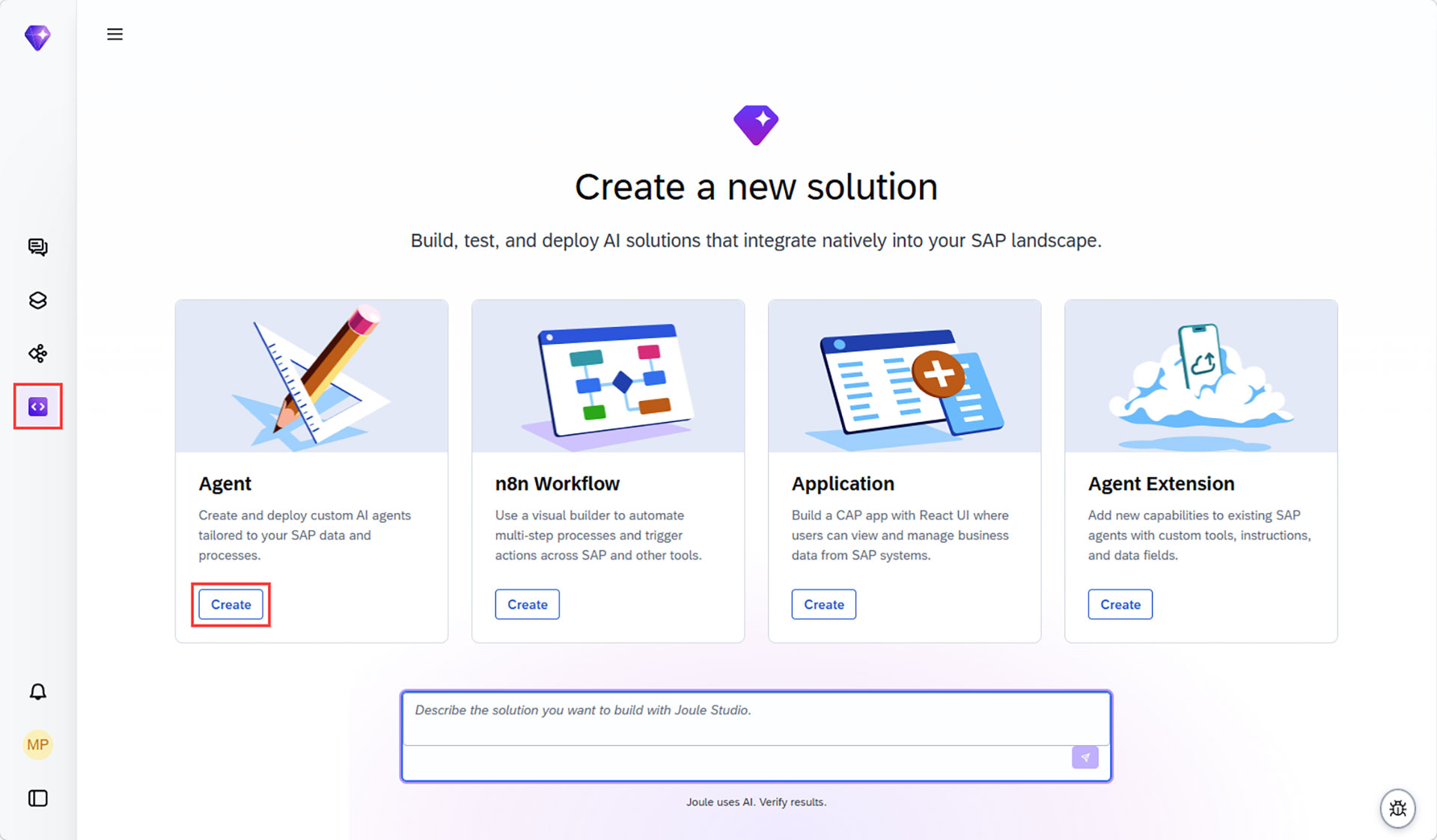
Screenshot from SAP Joule Studio. Source: SAP

Why is this topic becoming so relevant right now?
Several developments are converging. Cost pressures in finance, procurement, and HR are rising, while skilled workers for repetitive tasks remain in short supply. At the same time, large language models have now reached a level of reliability that makes their productive use in sensitive ERP processes a realistic possibility – provided they are linked to real business data and process logic, rather than relying solely on general internet knowledge. SAP itself describes this development as a transition from ad hoc AI enhancements to a consistently AI-based enterprise architecture, in which deterministic systems are supplemented by a layer for continuous learning and agent-based AI. 

According to market observers, a significant portion of enterprise applications will include task-specific AI agents by the end of 2026 – a significant leap from what was standard just a few years ago. Anyone who does not understand today what AI agents can accomplish in the SAP context is missing out on a competitive advantage that will be nearly impossible to make up for in the coming years.

What exactly is an AI agent in the SAP environment?

An AI agent in the SAP environment is a software system that, based on language models and business rules, independently plans, executes, and monitors multi-step tasks within SAP processes – without requiring a human to approve every single step . In doing so, it accesses real business data from SAP systems, understands the business context of a task, and can communicate with other agents or systems to achieve a goal. The key difference from a chatbot is that the AI agent does not merely provide a recommendation but actually carries out the action within the system – such as creating a purchase order, reconciling an account, or pre-qualifying a job applicant.

Within this concept, SAP now distinguishes between two roles that are often confused: Joule Agents and Joule Assistants. A Joule Agent specializes in a specific business task and is equipped with the relevant process knowledge – such as verifying invoices, planning production orders, or preparing employee reviews – examples include the Digital Service Agent or the Cash Positioning Agent. Further examples can be found in SAP’s Discovery Center. A Joule Assistant operates at a higher level: It understands a user’s role and business context, translates an intent into specific action steps, and coordinates one or more suitable Joule Agents to carry them out.

What SAP technologies are behind this?

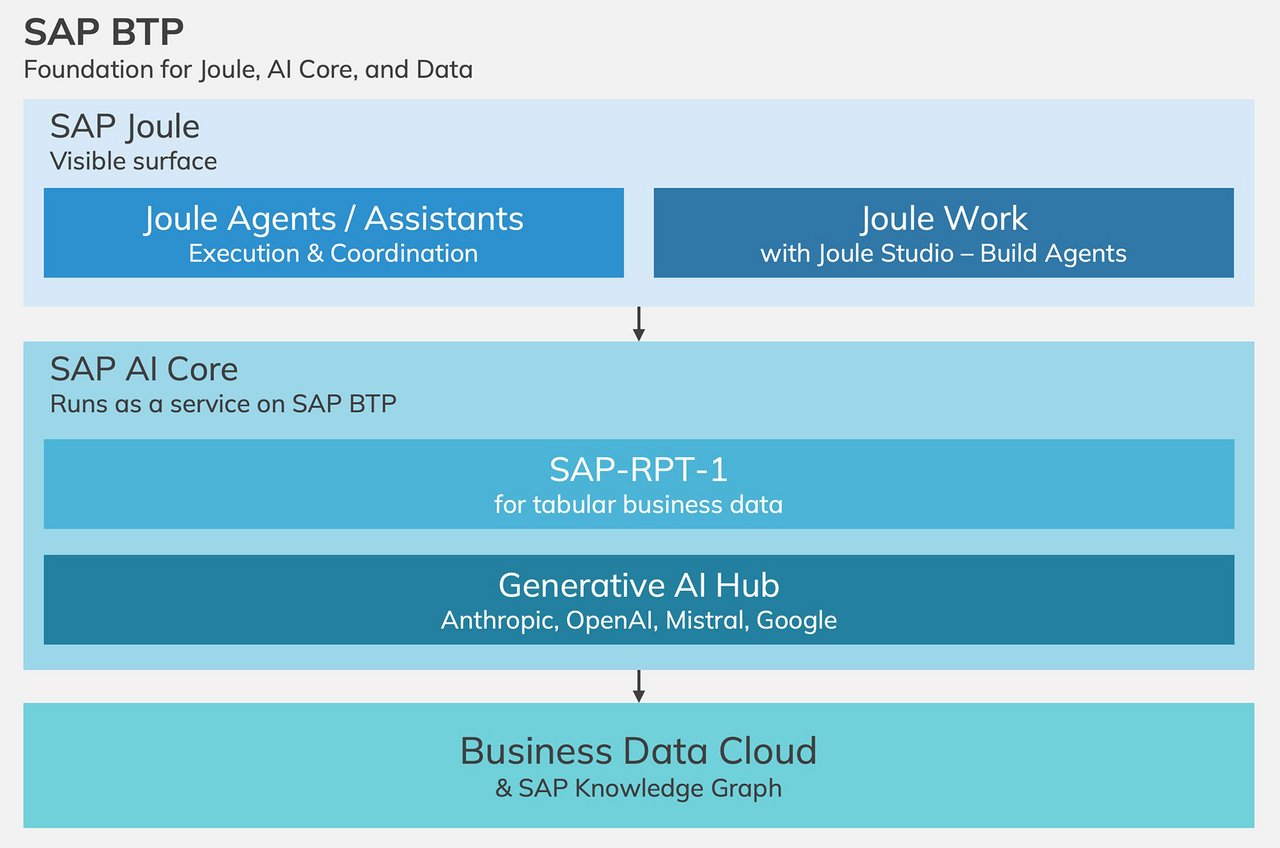
AI agents don’t emerge in a vacuum. They are based on the interplay of several SAP technologies that together form the technical foundation for SAP AI.

SAP Joule: The User Interface for Joule Agents, Joule Assistants, and Joule Work

SAP Joule serves as the visible interface – the assistant or platform through which users interact with agents, delegate tasks, and view results. Both the specialized Joule Agents and the coordinating Joule Assistants operate within Joule. Added to this is the new Joule Work workspace, which consolidates tasks, data, and agent workflows in one place. The various Joule Agents and Joule Assistants can also be accessed there.

SAP AI Core: Integrating In-House and External Models

SAP AI Core provides the actual computing power as a technical runtime environment in which AI models are trained, deployed, and operated. This is where the model calls that an agent needs to make decisions are executed – either using SAP’s own models, such as SAP RPT-1, which is optimized for tabular business data, or models from external providers such as Anthropic, OpenAI, Mistral, or Google, which SAP integrates via the Generative AI Hub.

SAP BTP als Basis: Von Agent Builder bis Knowledge Graph

The foundation is SAP BTP, the Business Technology Platform: It provides integration services, data connectivity, security mechanisms, and the development environment that enables companies to build their own agents or customize existing ones. Agents are built and customized in the so-called Agent Builder in Joule Studio 2.0, which was unveiled at Sapphire in May 2026 and is located within the Joule Work environment. A key feature of the new Joule Studio is its openness to third-party providers. Through the Model Context- Protocol (MCP) and the Agent-to-Agent Protocol (A2A), agents built in Joule Studio can collaborate not only with other SAP agents but also with agents and models outside the SAP ecosystem, such as Microsoft 365 Copilot or third-party models like Anthropic. 

In addition, SAP connects the BTP to the SAP Business Data Cloud and the SAP Knowledge Graph, which provide master data, process logic, and authorizations in a uniform manner across the enterprise, enabling agents and assistants to consistently access the same business context.

These building blocks – Joule as the interface, AI Core as the computing layer, BTP as the platform, supplemented by Business Data Cloud and Knowledge Graph as a shared data foundation – together form the technical backbone of SAP’s artificial intelligence strategy. It’s important to understand that SAP does not position itself as a provider of its own base models for general-purpose natural language processing, but rather primarily as an orchestration layer through which customers can also integrate models from external providers.

Which processes can be automated with this?

AI agents are particularly valuable in situations where processes are rule-based, data-intensive, and error-prone. They automate recurring tasks, reduce manual effort, and support employees in decision-making.

  • In Financial Accounting (FI), for example, the Accounting Accruals Agent handles the systematic processing of accruals by analyzing historical financial data and relevant accounting regulations and automatically generating journal entries that only need to be reviewed. In addition, a Cash Positioning Agent ensures proactive liquidity planning by tracking opening balances and forecasted cash flows and identifying potential bottlenecks early on. 
  • In Materials Management (MM), agents help automatically create purchase requisitions as soon as inventory levels fall below reorder points, evaluate suppliers based on performance data, and monitor delivery dates to escalate issues early in the event of delays. The Production Planning and Operations Agent goes one step further: It automatically checks whether materials, capacity, and scheduling are sufficient to approve a production order, suggests alternative components or schedule adjustments in the event of bottlenecks, and forwards the final approval to the responsible planner.
  • In Human Resources (HR), the Performance Preparation Agent supports managers by automatically compiling relevant performance data and generating personalized discussion points for employee reviews. The pre-qualification of job applications and support for onboarding processes – from access requests to training planning – are now also part of its standard repertoire.

The common thread running through all these examples: wherever data from multiple systems needs to be consolidated, rules applied, and follow-up actions triggered, AI agents can take over the bulk of the work, with employees only needing to be involved in genuine exceptional cases.

What does a company need to implement AI agents in SAP?

Getting started with agent-based SAP AI requires meeting certain organizational and technical prerequisites. First, a suitable cloud model is needed: Most agent functions are designed for S/4HANA Cloud or comparable cloud solutions. ECC systems operated purely on-premises cannot use many functions at all or can only use them to a limited extent. Although SAP has since created transitional offerings for companies that are already in the midst of migration and have shifted a significant portion of their maintenance to the cloud, a certain degree of cloud proximity remains a basic requirement.

Added to this is access to the SAP Business Technology Platform. Without an active BTP contract, agents cannot be configured or customized. Companies therefore need the appropriate technical expertise to correctly set up integrations, authorizations, and data flows – especially when developing their own agents via Joule Studio or adapting existing agents to company-specific processes.
 

Anyone wishing to develop their own agents using Joule Studio should also clarify licensing requirements early on. Usage is billed via the consumption-based AI Units model, and not every RISE with SAP quota automatically covers the full range of Joule Studio features. It is therefore worth checking before the project starts how many Joule Assistants and AI Units are included in the existing contract and whether an extension will be necessary for the planned scope.

Last but not least, the data strategy determines success or failure. AI agents are only as good as the data they access. Inconsistent master data, unclear responsibilities, or poor data quality directly lead to erroneous agent decisions. Companies should therefore clarify before implementation which data is located where, how up-to-date it is, and who is responsible for maintaining it. In addition, a governance framework is needed that defines who is authorized to grant which permissions to which agents, and which actions may run completely autonomously versus those that still require human approval. These questions should be answered before the system goes live, not afterward.

How does agentic AI differ from traditional process automation?

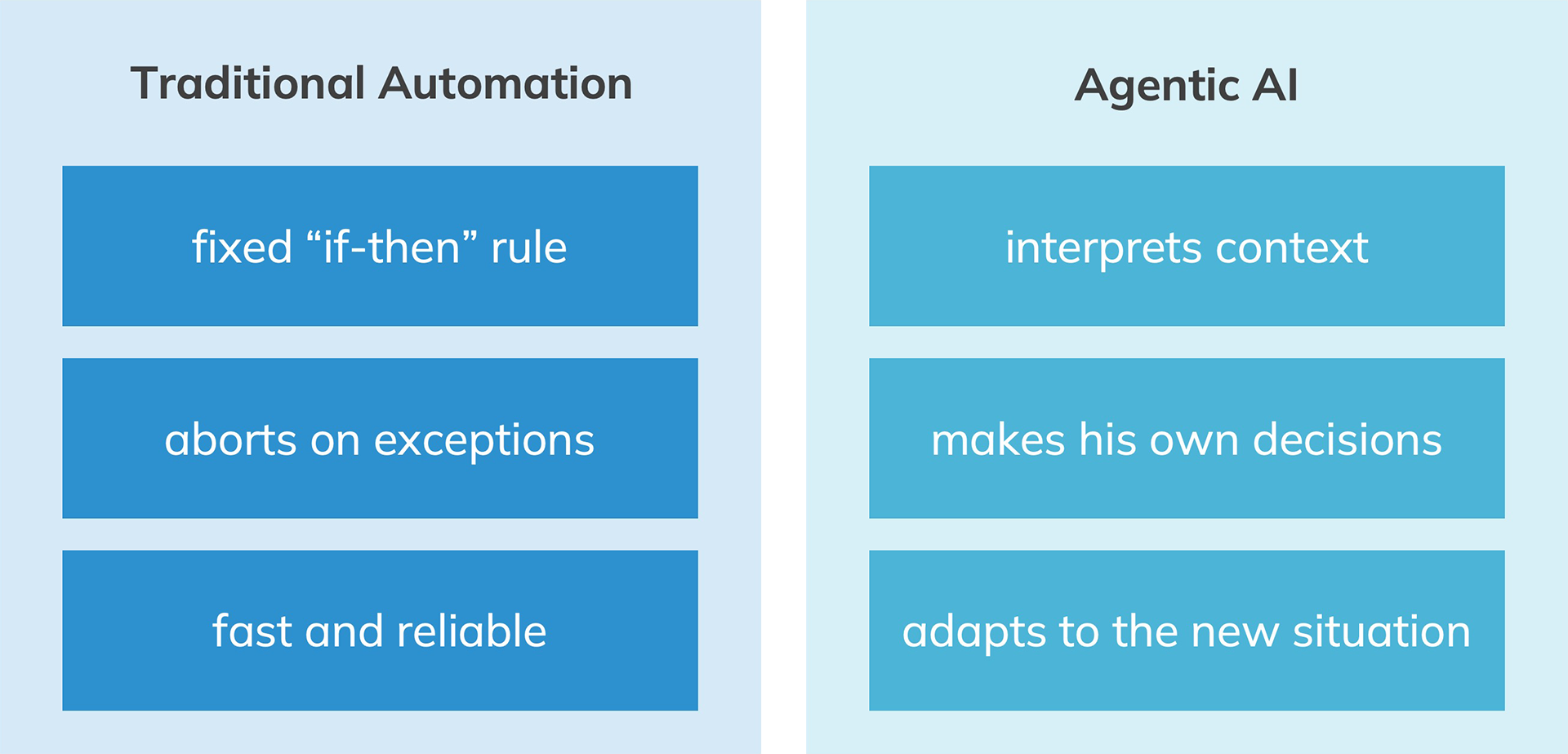
The technical term “agent-based AI” describes AI systems that perform tasks independently and in multiple stages, making decisions, interacting with external tools, and adapting their approach to new information without requiring human intervention at every step. This fundamentally distinguishes agent-based AI from traditional process automation, as exemplified by RPA (Robotic Process Automation).

Traditional automation follows rigid, predefined rules: If X occurs, execute Y. It is fast and reliable, but inflexible – if the context changes, a human must adjust the rule. Agentic AI, on the other hand, can interpret context, weigh multiple possible courses of action, and continue working effectively even when a situation does not exactly match the intended pattern. For example, an agent not only recognizes that an invoice does not match the order but can also independently verify whether it is a typo, a partial delivery, or a genuine error – and react accordingly.

For companies, this means that Agentic AI does not replace existing automation per se, but rather supplements it with a layer capable of handling uncertainty and exceptions. It is precisely this capability that makes AI agents attractive for complex, highly variable SAP processes where traditional rules reach their limits.

Conclusion

AI agents in the SAP context mark a turning point in how companies use their ERP landscape. A system that waits for input is transformed into one that thinks for itself and acts independently. SAP Joule provides the interface for this; specialized Joule Agents handle the actual execution; Joule Assistants coordinate them based on roles; SAP AI Core provides the computing power; and SAP BTP forms the foundation. 

Those who lay the organizational groundwork today – cloud connectivity, BTP access, and a sound data strategy – are setting the stage for a level of automation that goes far beyond traditional process automation.

Would you like to know how AI agents can be deployed in your SAP landscape?

Whether it’s cloud readiness, BTP licensing, or data strategy – the best way to determine which requirements you’ve already met and where adjustments are still needed is through direct discussion. In a no-obligation consultation, we’ll review your existing SAP landscape together and show you which AI- agents are ready for use in your processes today and where it’s worth getting started. Schedule a consultation with our experts now.


Contact us! 

FAQs:

The previous SAP Joule was essentially a reactive assistant: Users asked a question or made a request, and Joule provided an answer, summary, or recommendation, but the human still took action. The new world of AI agents flips this principle on its head. Joule Agents independently monitor processes, detect deviations, and execute multi-step tasks without constant approval, while Joule Assistants coordinate these agents based on their roles. SAP Joule hasn’t disappeared; rather, it has evolved from a simple question-and-answer tool into the interface for an entire agent platform where Assistants and Agents work together.

SAP Joule is the platform and interface through which users interact with AI functions. Within this platform, Joule Agents handle the actual execution of specialized tasks, while Joule Assistants act as role-based coordinators who translate an intent into concrete action steps and direct the appropriate agents. So you can think of Joule as the umbrella under which Assistants and Agents each take on different, complementary roles.

A Joule Agent performs a specific, technically specialized task within a process, such as verifying an invoice or planning a production order. A Joule Assistant operates at a higher level: It understands the user’s role and context, translates a goal into concrete steps, and coordinates one or more suitable Joule Agents in the background to accomplish this. Put simply: Agents execute, Assistants orchestrate.

Only to a limited extent. Most agent functions are designed for S/4HANA Cloud or comparable cloud environments. SAP offers transitional solutions for companies that are already in the process of migrating. However, a full range of functions generally requires a cloud connection.

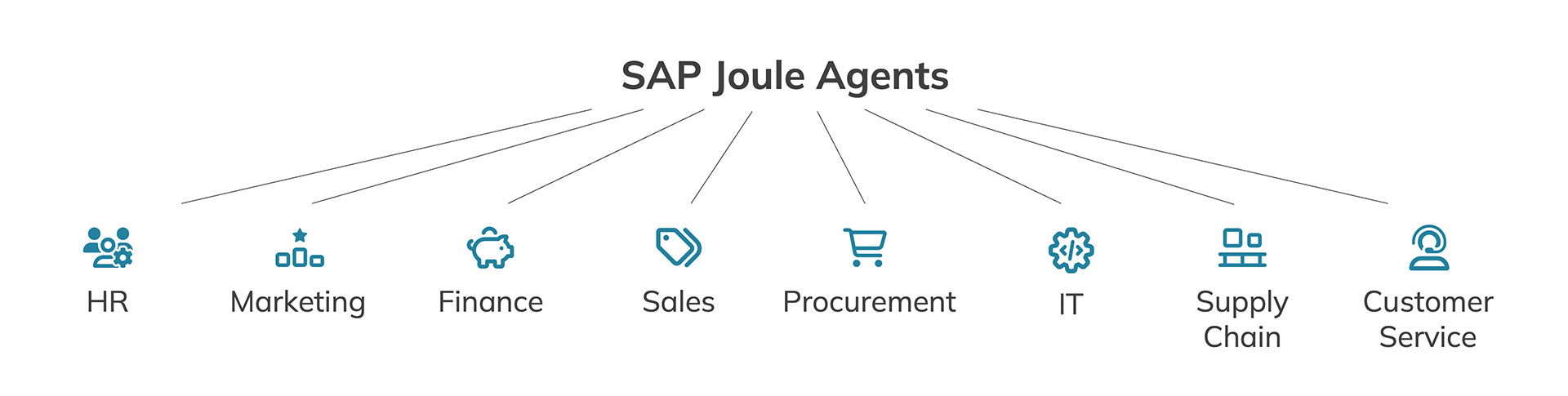
Finance, Materials Management, and Human Resources benefit particularly strongly, as these areas involve many data-intensive, rule-based, yet highly variable processes. Supply Chain and Customer Service are also already showing significant efficiency gains through the use of specialized agents.

Agents operate within clearly defined permissions and governance rules that companies establish themselves. Critical or high-stakes actions can still be subject to human approval, while routine tasks can run completely autonomously. Security therefore depends largely on the care taken during configuration, not solely on the technology itself.

Costs vary widely depending on the existing SAP landscape, licensing model, and scope of the desired agent and assistant functions. In addition to licensing costs for BTP and Joule, there are often expenses associated with data preparation, integration, and change management. A reliable cost estimate typically requires an individual consultation to assess the existing system landscape.

Joule Studio is the development environment that enables companies to build their own AI agents and skills when the standard agents provided by SAP do not fully cover their specific processes. The integrated Agent Builder supports both low-code development for business users and fully code-based implementation for professional development teams. Joule Studio 2.0 is particularly relevant for companies with specific, non-standardized processes, as well as for anyone who wants to connect agents to third-party systems via MCP or the A2A protocol.

Contact our expert